
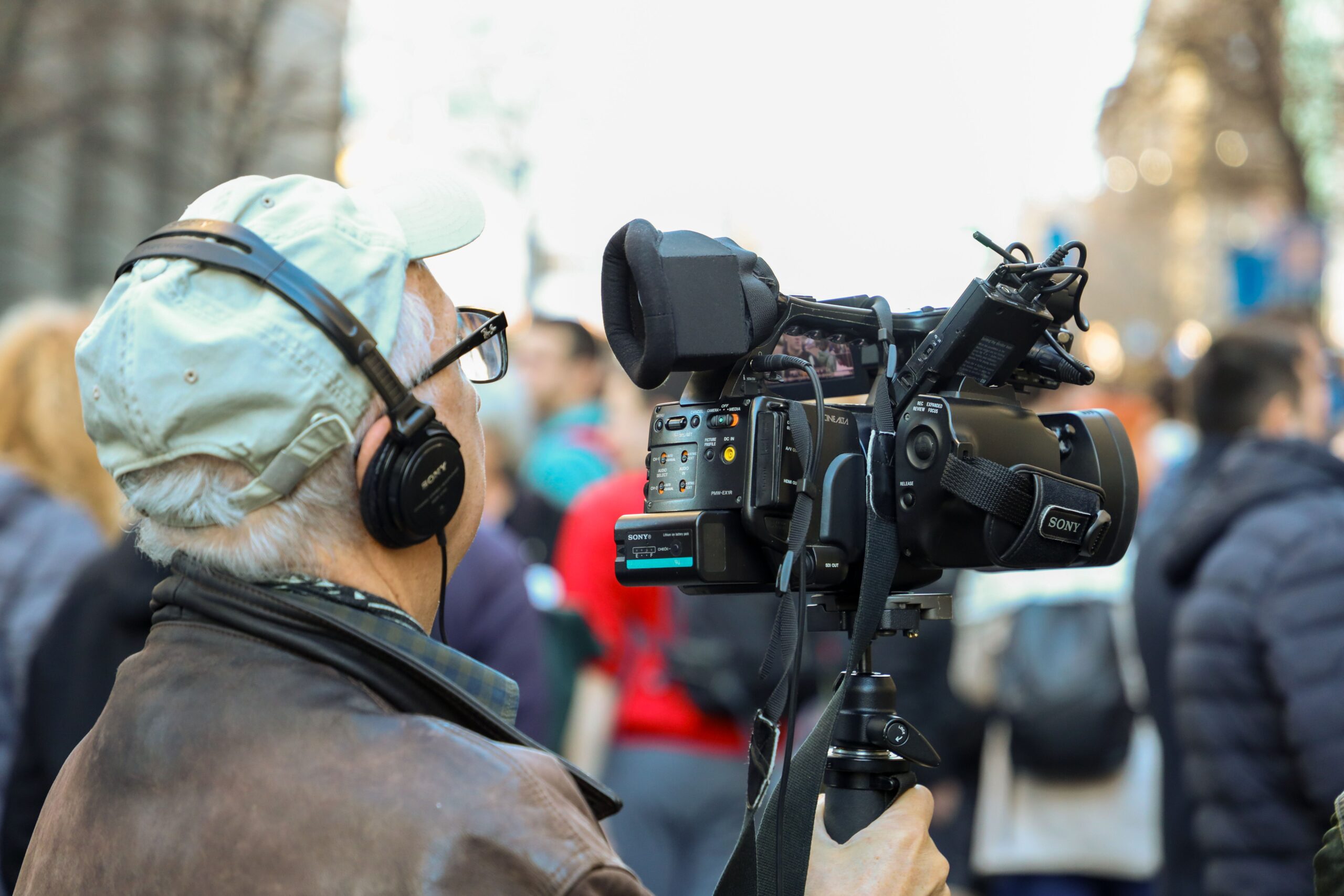
Modernising Live Broadcasting Infrastructure
Modernising Live Broadcasting Infrastructure
Supporting real-time media delivery with a resilient, low-latency network design
Overview
A leading broadcasting corporation engaged EWORLD to assess and modernise how live content is transmitted between filming locations, addressing the limitations of traditional outside broadcast (OB) and microwave-based workflows in terms of cost, flexibility, and scalability.
Working closely with the client, EWORLD identified the constraints of the existing approach and designed a more efficient, future-ready alternative built on secure, IP-based connectivity. The solution, powered by Palo Alto Networks, enables the reliable transmission of live media between sites with ultra-low latency, built-in resilience, and full end-to-end encryption.
As a result, the organisation now operates with a more versatile and scalable production model, reducing reliance on traditional broadcast infrastructure while gaining greater flexibility and control over how live content is delivered.
The Challenge
The broadcasting landscape is evolving rapidly, as organisations move away from fixed, hardware-driven transmission models towards more flexible, IP-based workflows. This shift is driven by a multitude of factors, namely rising expectations around production quality, immediacy, and viewing experience.
For broadcasters, the challenge is not only how content is delivered, but how to capture, process, and transmit video and audio in increasingly complex environments without any visible impact to the viewer.
For this particular client, several challenges were becoming critical:
1. Dependence on traditional OB infrastructure
Outside broadcast vans and microwave links are expensive, resource-intensive, and difficult to scale. They require specialised crews, logistics, and equipment that increase operational costs and limit agility.
2. Growing pressure for remote and distributed production
Modern broadcasting increasingly relies on producing content across multiple locations. This requires networks that can reliably transmit high-quality video feeds with minimal delay.
3. Latency sensitivity in live broadcasts
Live broadcasting requires near-instant transmission. Even minimal delays can disrupt synchronisation between feeds, affect switching decisions in the control room, or create a noticeable lag for viewers, particularly in live events such as sports or breaking news.
4. Reliability and continuity requirements
Live broadcasting does not tolerate downtime. Systems must be resilient, with built-in redundancy to ensure continuous transmission even in the event of failures.
5. Security of broadcast streams and infrastructure
As workflows move to IP networks, protecting media streams from interception or disruption becomes a growing concern.
6. Adapting to diverse production inputs
Content is now captured across a wider range of devices and environments, from professional broadcast cameras to mobile and remote setups. While this increases flexibility for production teams, it also introduces complexity in ensuring that all feeds are consistent in quality and timing, and that transitions remain seamless for the audience.
7. Keeping pace with new connectivity capabilities
Advancements in technologies like 5G are changing what is possible in live broadcasting, enabling real-time transmission directly from the field with higher bandwidth and lower latency. This creates new opportunities for more flexible production models, while also requiring broadcasters to rethink how their underlying infrastructure supports these workflows.
Solution and Outcome
In order to address the challenges facing the client, EWORLD designed and implemented a next-generation IP-based transmission architecture using Palo Alto Networks. Each site is linked back to a central editing and broadcast station, which enables secure, high-performance connectivity between broadcast locations.
This was achieved through a combination of the following technologies:
– Secure IPsec VPN tunnels for encrypted transmission of live media
Live video feeds are transmitted over IP networks, which introduces potential security risks. IPsec tunnels encrypt all data in transit, ensuring that broadcast content cannot be intercepted or tampered with. For the client, this provides confidence that critical live feeds can be transmitted securely across public or private networks without compromising quality or integrity.
– Dynamic BGP routing to ensure resilient and intelligent traffic paths
Border Gateway Protocol (BGP) continuously determines the most efficient path for data to travel between locations. If a route becomes unavailable or degraded, traffic is automatically redirected without impacting the broadcast.
– Redundant ISP connectivity to maintain uptime and service continuity
Multiple internet service providers are used in parallel, creating alternative paths for transmission. If one connection fails or becomes unstable, the system simply switches to another. This ensures that broadcasts remain uninterrupted even in the event of network issues.
– Next-gen Palo Alto Networks firewalls to protect and manage all traffic
The firewalls act as a central control layer that monitors, secures, and prioritises traffic across the network. It maintains high performance for live media streams, while also protecting the wider infrastructure from external threats and unauthorised access.
By modernising this client’s infrastructure, EWORLD enabled a shift from rigid, cost-intensive workflows to a flexible, scalable, and future-ready architecture, positioning the broadcaster to deliver content more efficiently, securely, and reliably.
Looking to modernise your broadcast workflows?
Modern broadcast environments demand more flexibility, resilience, and control than traditional workflows can deliver. With the right architecture and approach, these transitions can be achieved without compromising performance or reliability.
If you’re exploring how to modernise your broadcast operations, we’d be happy to share our experience. Contact us today and let’s talk about how we can make your next IT challenge a success.
